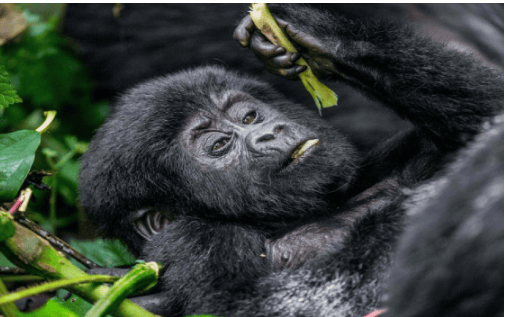

A standard gorilla trek is one of the great wildlife encounters, but it is brief. Once you find the family, you have one hour. For travellers who want something slower, deeper and more intimate, Uganda offers the gorilla habituation experience, often shortened to GHE. It lets a very small group spend up to four hours with a gorilla family that is still learning to accept human presence.
This guide explains what the experience is, how it differs from a standard trek, what it costs, how to book it and how to prepare.
What Is the Gorilla Habituation Experience?
Habituation is the process by which wild gorillas gradually become comfortable with the presence of humans, so that they can be observed without stress or aggression. It takes around two years of patient, daily contact by trackers and researchers. Only then is a family considered fully habituated and open to standard trekking.
The gorilla habituation experience lets visitors take part in the later stages of this process. In practice, you join rangers, trackers and researchers as they follow a semi-habituated family. One source describes it as a rare wildlife encounter that allows visitors to spend up to four hours with a semi-habituated mountain gorilla family in their natural habitat.
It is not a gimmick. Visitors witness the work that makes gorilla tourism possible, and permit revenue supports the process.
Where Is It Offered?
The experience is available only in the Rushaga sector of Bwindi Impenetrable National Park, in southwestern Uganda. Rushaga has the largest number of habituated gorilla families of any Bwindi sector, and it is the one place in the world where this longer encounter is offered. A 2026 comparison states that Uganda offers the only 4-hour habituation experience in the world.
The programme was introduced by the Uganda Wildlife Authority as a pilot in the mid-2010s, with sources giving 2014 or 2015 as the starting point. Two families have been reported as undergoing habituation in Rushaga, although which families are available can change as habituation progresses, so confirm this with your operator.
How It Differs from a Standard Gorilla Trek
| Feature | Standard trek | Habituation experience |
| Time with gorillas | 1 hour | Up to 4 hours |
| Group size | Up to 8 visitors | Up to 4 visitors |
| Gorilla family | Fully habituated | Semi-habituated |
| Location | Several sectors and parks | Rushaga sector only |
| Permit price (foreign non-resident) | $800 in Uganda | $1,500 |
| Participation | Observation | Observation alongside trackers and researchers |
One 2026 guide confirms that standard trekking carries a maximum of eight visitors per group and one hour with the gorillas, while the habituation experience is limited to just four visitors per group each day. The smaller group and longer time create a calmer, more personal encounter, with room to observe behaviour rather than rush through photographs.
What Actually Happens on the Day
Early start. You gather at the Rushaga headquarters in the morning for registration and a briefing, typically earlier than a standard trek because you want as much time with the family as possible.
Finding the gorillas. Trackers set off ahead, following the previous day’s trail. Unlike standard treks, the clock does not begin until you reach the family. One operator explains that the permit gives four hours from the moment fresh trails are encountered. Trekking time to reach the group varies widely, from under an hour to several hours depending on where the gorillas moved overnight.
Time with the family. Once you meet the gorillas, you move quietly with the rangers. Because the animals are still adapting to humans, behaviour can be more dynamic. They may move, feed, rest and play, while trackers explain what they are doing to build trust. You see how the gorillas react to people, and why calm, slow behaviour matters.
Insight from experts. Researchers and guides share observations about family structure, feeding, social ties and the difficulties of habituation. Many visitors say this context is as valuable as the sightings.
Return. After your allotted time, you hike back and head to your lodge, often tired but deeply satisfied.
Cost and Permits
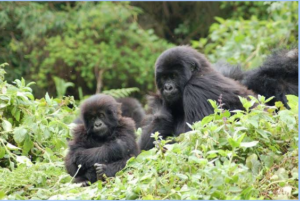
The permit is the main expense. Multiple sources agree that the experience costs USD 1,500 per permit and allows four hours with a group of mountain gorillas under habituation, with a maximum of four people per family and each person aged 15 or older. The permit is reported to include up to four hours with a semi-habituated family, the services of rangers, guides and researchers, and park entry for the day.
For comparison, a standard Uganda gorilla permit costs $800 per person in high season, or $600 in discounted months, so the habituation experience costs nearly double. Rates are set by the Uganda Wildlife Authority, and one source notes that 2026 rates were valid through 30 June 2026, so verify the tariff for your actual travel date.
Beyond the permit, budget for:
- Accommodation near Rushaga, from mid-range lodges to luxury camps
- Transfers by road or domestic flight
- Porters, whose services are inexpensive and supportive of the community
- Meals, drinks and tips
- Travel insurance and visas
Booking Tips
Because the experience is so limited, planning ahead is essential.
- Book early. One source reports that only eight habituation permits are sold per day, split between two families still undergoing habituation. Others note that availability is tight enough that advance booking of many months, and sometimes much longer, may be required.
- Use a reputable operator. Make sure your permit is confirmed with the authority before paying in full, and understand cancellation and rescheduling terms.
- Be flexible with dates. Peak months sell out first, so shoulder periods can improve your odds.
- Confirm which family you will visit. The families under habituation can change, so ask for the latest information.
Getting to Rushaga
Rushaga is in the southern part of Bwindi. Road access is long from Entebbe or Kampala, with sources suggesting a drive of 8 to 10 hours from Kampala, or about 4 hours from Queen Elizabeth National Park. A popular alternative is to fly into Kigali, Rwanda, and cross the border, which another operator describes as a journey of 4 to 5 hours to Bwindi’s southern sectors. A domestic flight to a nearby airstrip, such as Kisoro, is also an option. Many travellers combine Rushaga with a Rwanda gorilla trek and a few days of savannah safari.
Is It Physically Demanding?
Yes, and it deserves honest consideration. Bwindi is a dense, steep rainforest, and the altitude, humidity and mud can make hiking tiring. The trek to find the family may take several hours, followed by up to four hours of standing, sitting and moving slowly with the gorillas, then a return hike. Reasonable stamina is important.
To prepare:
- Walk hills and climb stairs for several weeks beforehand.
- Break in your hiking boots well before the trip.
- Hire a porter. They carry your bag, offer a steady hand and benefit directly from your visit.
- Pack lightweight layers, a waterproof jacket, gardening gloves, long trousers, a long-sleeved top, insect repellent and plenty of water and snacks.
- Bring a camera with fast performance in low light. Flash is not allowed.
Rules and Etiquette
Because the gorillas are still adapting, rules are strict:
- The minimum age is 15.
- Do not trek if you are unwell. Gorillas can catch human respiratory illnesses.
- Maintain the distance your guides specify, and follow instructions immediately if the gorillas approach.
- Keep your voice low and move slowly.
- No flash photography, eating or smoking near the animals.
- Do not litter or leave anything behind.
These measures protect the gorillas and keep the programme sustainable.
Who Is It Best For?
Ideal for: photographers, nature enthusiasts, repeat visitors, conservation-minded travellers and anyone who finds one hour too short.
Less suitable for: travellers with limited mobility, those on a tight budget or anyone who prefers a shorter, less strenuous outing. If your priority is simply to see gorillas once, a standard trek is excellent value.
Conclusion
The gorilla habituation experience turns a brief encounter into an extended, immersive one. Four hours in a small group, guided by rangers and researchers, gives you time to watch behaviour unfold, to understand the work behind gorilla conservation and to feel less like a visitor passing through. It is more expensive and more demanding than a standard trek, and it requires early booking and good fitness. For travellers who want depth over speed, though, it may be the most rewarding way to meet mountain gorillas. Confirm current tariffs, book far ahead, prepare physically and treat the forest and its inhabitants with respect. The reward is a rare chance to share part of a wild gorilla’s day.
Key Takeaways
- The gorilla habituation experience offers up to four hours with a semi-habituated family, compared with one hour on a standard trek.
- It is available only in the Rushaga sector of Bwindi Impenetrable National Park, Uganda.
- The permit costs $1,500 per person, compared with $800 for a standard Uganda permit. Verify current rates.
- Groups are limited to four visitors, and the minimum age is 15.
- Permits are scarce and often require booking many months ahead.
- The trek can be physically demanding, so prepare with fitness training, proper boots and a porter.
- Strict health and behaviour rules protect the gorillas.
Frequently Asked Questions
- What is the gorilla habituation experience?
It is a Uganda-only activity that lets visitors spend up to four hours with a semi-habituated gorilla family while rangers and researchers continue the habituation process. - Where does it take place?
Only in the Rushaga sector of Bwindi Impenetrable National Park in southwestern Uganda. - How much does it cost?
The permit is $1,500 per person, according to multiple 2026 sources. Always confirm the current rate with the Uganda Wildlife Authority or your operator. - How many people can join?
A maximum of four visitors per group. - How long do I spend with the gorillas?
Up to four hours once you reach the family, compared with one hour on a standard trek. - Is it better than a standard trek?
It depends on your priorities. The habituation experience is longer, quieter and more educational, while a standard trek is cheaper and shorter. - Is it physically difficult?
It can be. Bwindi’s terrain is steep, muddy and humid, and the time spent walking and standing is longer than a standard outing. Moderate to good fitness helps. - What is the minimum age?
15 years. - How far ahead should I book?
As early as possible. Availability is very limited, so many months ahead is wise, and some operators suggest even longer for peak periods. - Can I combine it with other activities?
Yes. Many travellers pair it with a standard trek in Bwindi or Rwanda, chimpanzee tracking in Kibale, or a savannah safari in Queen Elizabeth National Park.