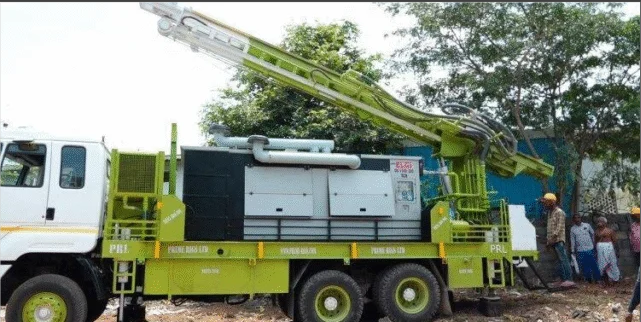

Reliable groundwater access depends heavily on the precision and capability of drilling systems used during well development. Advancements in equipment design, automation, and power delivery have transformed how subsurface water sources are reached. A modern water well drilling rig machine enables deeper penetration, improved accuracy, and reduced operational strain, making groundwater projects more efficient and sustainable across varied terrains.
1. Advanced Engineering for Subsurface Precision
Modern drilling technology is engineered to deliver accuracy while navigating complex geological formations. Precision-focused designs help ensure reliable water access with minimal ground disruption.
- Improved borehole alignment
Advanced guidance systems maintain straight and stable drilling paths. Accurate alignment reduces structural issues within the borehole and supports long-term well integrity. This precision directly improves groundwater flow and well lifespan. - Controlled drilling depth management
Integrated monitoring tools allow operators to reach targeted aquifers without excessive excavation. Controlled depth reduces unnecessary drilling effort while protecting surrounding soil layers from collapse or contamination. - Consistent performance across varied soil types
Modern rigs adapt effectively to clay, sand, gravel, and rock formations. This adaptability ensures uniform drilling output regardless of ground conditions, improving overall project reliability.
2. Power Systems Supporting Efficient Drilling
Efficient power delivery plays a vital role in improving groundwater access by maintaining steady drilling momentum across challenging subsurface layers.
- High-torque power output
Enhanced engine systems generate the torque required to penetrate dense formations without interruptions. Stable torque delivery minimizes drilling delays and supports faster aquifer reach. - Optimized hydraulic control
Advanced hydraulic systems allow precise pressure adjustments based on ground resistance. This control prevents equipment strain while ensuring efficient penetration through compact layers. - Reduced fuel and energy consumption
Modern power systems are designed for efficiency, balancing performance with lower energy usage. Reduced fuel consumption helps control project costs while supporting sustainable drilling operations.
3. Operational Control and Safety Integration
Modern drilling technology enhances groundwater access by improving operator control and on-site safety throughout drilling operations.
- User-friendly control interfaces
Digital control panels provide real-time feedback on drilling speed, pressure, and depth. Improved visibility allows operators to make timely adjustments for optimal performance. - Enhanced operational stability
Stabilization systems reduce vibration during drilling. Greater stability protects equipment components and improves drilling accuracy, particularly in deeper groundwater projects. - Built-in safety mechanisms
Automated shutdown systems and pressure controls reduce operational risks. Safety-focused designs protect personnel and equipment while maintaining continuous drilling efficiency.
4. Long-Term Reliability and Project Efficiency
Groundwater projects require equipment that delivers dependable results over extended operational periods. Modern drilling technology is built for longevity and consistent output.
- Durable structural construction
Reinforced frames and corrosion-resistant materials extend equipment lifespan. Durable construction ensures long-term reliability in both rural and industrial drilling environments. - Reduced maintenance downtime
Modern systems are designed for easy access to key components. Simplified maintenance reduces service interruptions and keeps groundwater projects on schedule. - Scalable performance for diverse applications
Modern rigs support various well depths and project sizes. This scalability allows operators to manage multiple groundwater projects efficiently with a single solution.
Conclusion
Modern drilling technology has significantly improved groundwater access by enhancing precision, power efficiency, safety, and operational reliability. These advancements allow water well projects to achieve greater accuracy while reducing environmental impact and operational costs. Companies such as Prime Rigs contribute to this progress by offering dependable drilling solutions designed to meet diverse groundwater development needs, supporting long-term water access with performance-driven equipment and industry expertise.